Why High Performers Burn Out Even When They’re Successful
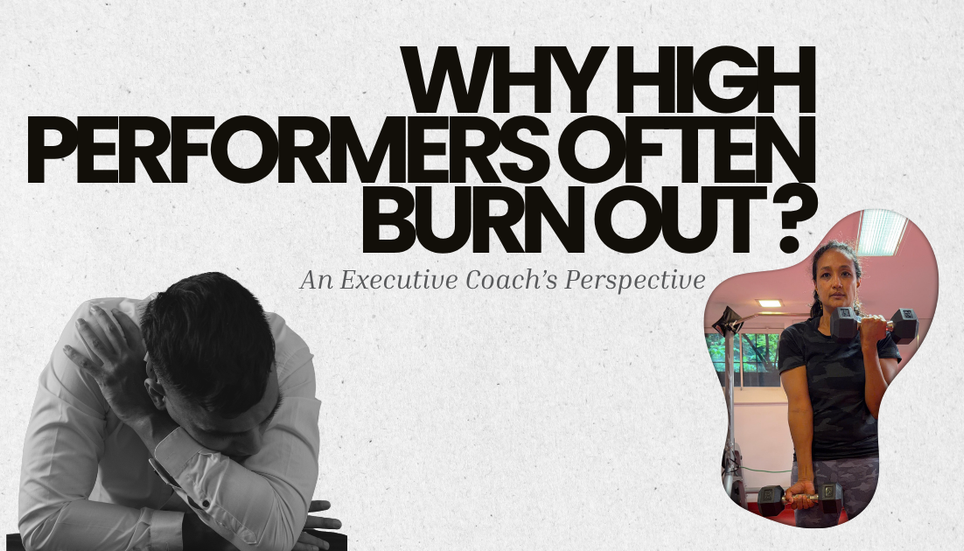
I have noticed something about people who are very good at what they do.
They often become the person everyone counts on.
The one who remembers. The one who steps in. The one who can hold a difficult conversation, solve the problem, make the decision, keep things moving. Over time, competence becomes part of how they are known. Sometimes, it becomes part of how they know themselves.
And because things are, by most measures, going well, it can be difficult to explain why you feel so tired. You may have the career you worked hard for. A family you love. A life that looks full from the outside. You may even feel grateful for it all.
And still, something in you is asking for a pause.
I think this is one of the more complicated forms of burnout. The kind that arrives quietly. Not because everything has fallen apart, but because you have been carrying so much for so long that you have stopped noticing what it costs you.
High performers are often very practiced at responding to what is needed.
The harder question is: What do I need? That question can feel surprisingly unfamiliar.
In my coaching work, I often see people who have developed an extraordinary ability to adapt. They can read a room. Anticipate what is coming. Adjust their plans. Keep going when circumstances change. These are valuable strengths, particularly in uncertain times.
But resilience is not simply the ability to keep adapting.
Sometimes resilience asks us to notice when adaptation has become automatic.
I remember working with a client who was navigating a season of significant change. On paper, she was managing it beautifully. She was still showing up and still achieving. Still making things happen. But when we slowed down, she realised she had not really checked in with herself for months.
In one of our conversations, I asked her to imagine a day when she did not have to make a decision. She did not have to solve anything. She could simply sit with what was true.
There was a long pause. Then she said, almost with surprise, "I think I am tired of being the one who is okay." That stayed with me.
Sometimes the beginning of resilience is not becoming stronger. It is becoming more honest about where you are.
In a workshop, I might invite someone to close their eyes for a moment and notice what is happening in their body before they try to put it into words. Where are you holding tension? What happens when you stop trying to manage the experience? What do you notice when you give yourself permission to be present, rather than immediately moving toward the next thing?
These moments can seem small.
But something shifts when we begin to trust our own signals again.
We become less dependent on external measures of whether we are doing well. We start to recognise the difference between being stretched and being depleted. Between a meaningful challenge and a life that has become too full.
This matters because success can sometimes make it harder to change. When things are working, we can feel as though we have no good reason to reconsider them.
Yet life keeps changing. Our responsibilities change. Our relationships change. Our sense of who we are changes. What once sustained us may no longer be enough. I think resilience has something to do with being willing to meet yourself there.
Not with a grand reinvention. Not with another goal. Just a little more awareness. A little more presence. A willingness to hear the quieter voice beneath all the doing.
So, if you have been feeling tired lately, perhaps you might sit with one question:
What have I been asking myself to carry that I no longer need to carry in the same way?
You do not have to answer it immediately.
Sometimes the most important thing is simply to stop long enough to hear yourself.
And perhaps that is where a different kind of resilience begins.
Not in pushing yourself further, but in coming back into relationship with the person who has been carrying you all along.
Ready to take the next step?
Book a free consultation to talk through what's on your mind. Or explore our free resources if you'd rather take the first step on your own.
More recent articles